Pro-Ject has never been shy about introducing new turntables. Between the Debut, T1, E1, Primary, RPM, X Series, and various special editions, the Austrian manufacturer offers enough models to make choosing one feel unnecessarily complicated. So why introduce another Debut turntable in 2026? Because this time, Pro-Ject is going backward to move forward.
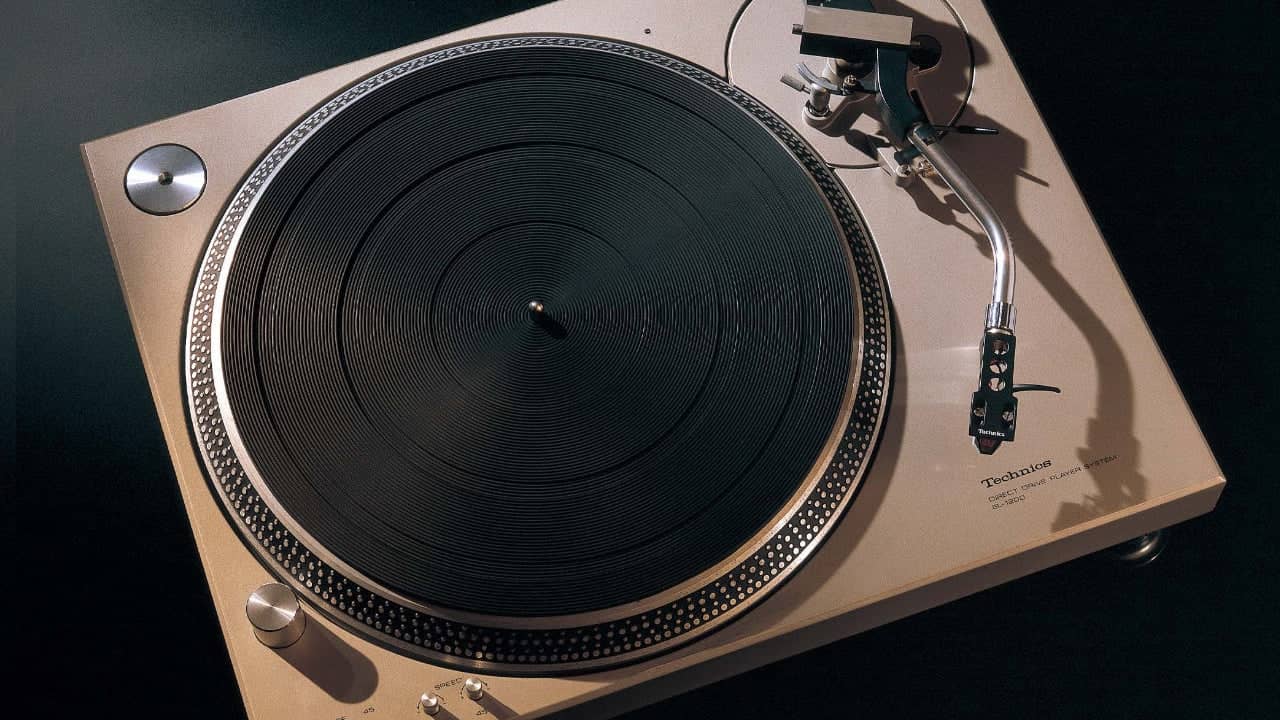
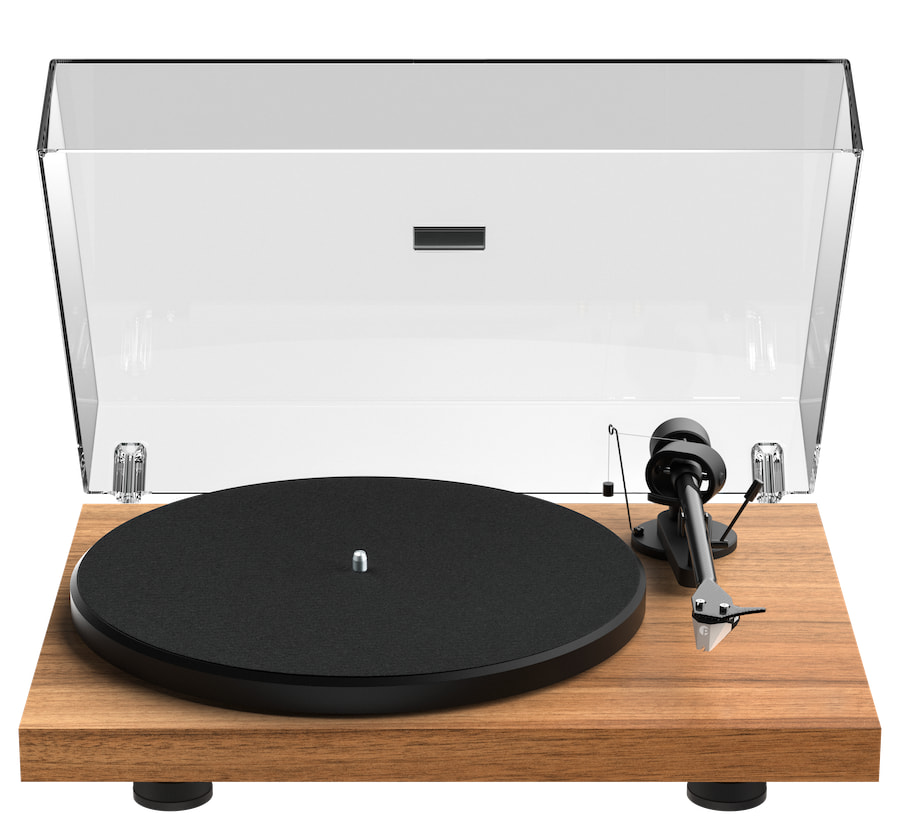
The new Pro-Ject Debut Carbon The Original ($649) revisits the formula that made the original 2012 Debut Carbon one of the most influential affordable audiophile turntables of its generation. Rather than introducing another elaborate design or technological upgrade, Pro-Ject has returned to a proven combination of a carbon fiber tonearm, substantial steel platter, belt-drive motor, and factory-installed moving magnet cartridge. It’s an interesting decision at a time when the company already has numerous turntables competing for the same customers.
Related Reading:
- Pro-Ject E1.2 BT Adds Bluetooth 5.4 And AptX HD To Its Best Value Turntable
- Are We Hitting Peak Turntable? Pro-Ject E1.2 Aims For Audiophile Sound Quality For Under $350
Returning to the Original Debut Carbon Formula
The original Debut Carbon, introduced in 2012, helped establish the carbon fiber tonearm as a realistic feature on relatively affordable turntables. At the time, that was significant. Buyers no longer needed to spend substantially more to obtain a lightweight, rigid tonearm designed to reduce unwanted resonance.
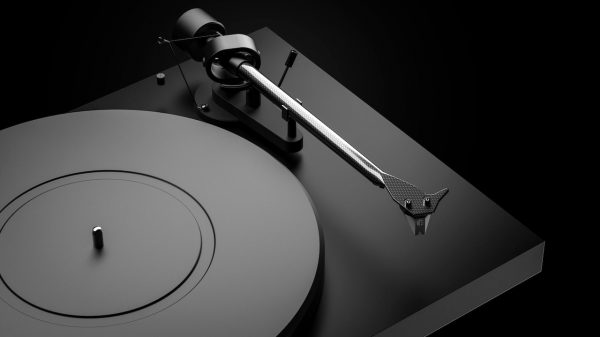
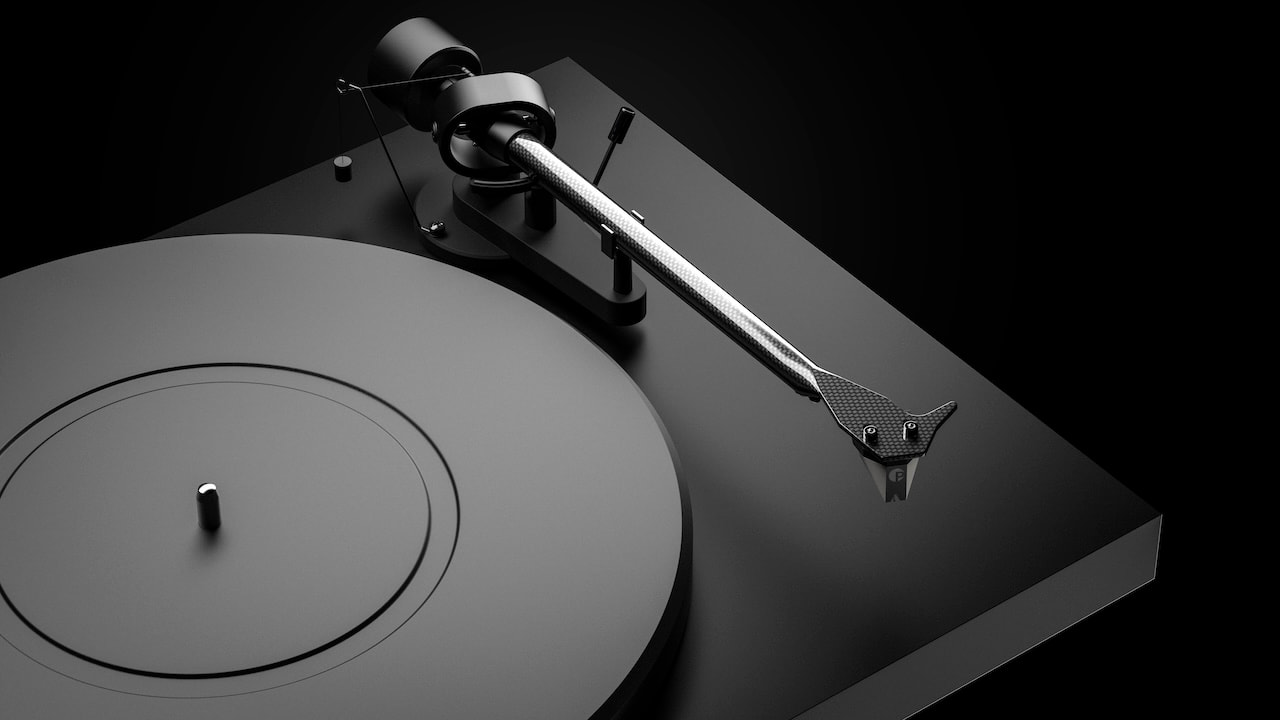
The 2026 model retains that fundamental approach but incorporates some newer components. Its 8.6-inch, one-piece carbon fiber tonearm features an integrated headshell and a CNC-machined aluminum bearing block. An adaptive anti-skating mechanism helps compensate for changes in skating force as the stylus moves across the record, while a TPE-damped counterweight is designed to reduce unwanted vibrations. Pro-Ject claims the latter can reduce tonearm and cartridge resonances by up to 50%, although that figure remains a manufacturer claim.
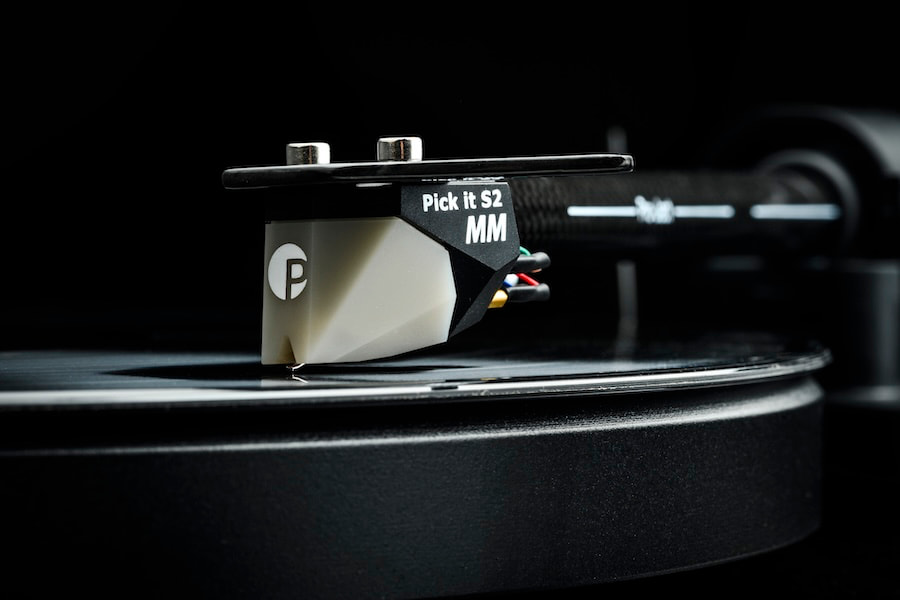
The preinstalled Pick it S2 MM cartridge is manufactured by Ortofon and tuned by Pro-Ject. It features an elliptical stylus, split pole pins, and a relatively robust cantilever. It’s a sensible choice for buyers who want a factory-aligned cartridge without having to tackle installation and setup immediately.
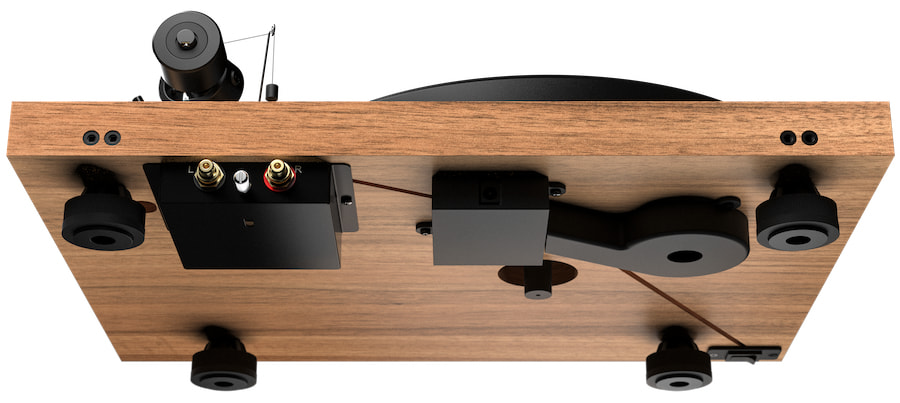
Below the platter, Pro-Ject has retained a fairly traditional design. A CNC-machined MDF plinth provides the foundation, while a 1.7 kg (3.75-pound) steel platter rests on a glass fiber reinforced ABS sub-platter. The main bearing uses a stainless steel axle and brass bushing, with a precision belt connecting the sub-platter to an aluminum motor pulley.
An AC synchronous motor sits on a TPE suspension intended to reduce vibration transfer into the plinth. It receives power from an internal DC/AC generator that supplies a controlled AC signal rather than driving the motor directly from household mains power. The objective is improved speed consistency and lower mechanical noise, although actual performance will need to be evaluated through listening and measurement.
There is one decidedly old-fashioned compromise. Switching between 33⅓ and 45 RPM requires manually moving the drive belt. That might not bother someone who primarily listens to LPs, but anyone with a healthy collection of 45 RPM records may find the absence of electronic speed switching rather irritating.
The Debut Carbon The Original also omits a built-in phono preamplifier. You’ll need an amplifier with an appropriate phono input or an external phono stage. That won’t trouble experienced vinyl enthusiasts, but newcomers should account for the additional expense.
Pro-Ject Debut Carbon The Original Specifications
- Type: Manual belt-drive turntable
- Speeds: 33⅓ and 45 RPM, manual belt adjustment
- Plinth: CNC-machined MDF
- Platter: 300 mm steel, 1.7 kg (3.75 pounds)
- Sub-platter: Glass fiber reinforced ABS
- Main bearing: Stainless steel axle with brass bushing
- Motor: AC synchronous motor with TPE suspension
- Motor control: Integrated DC/AC power generator
- Tonearm: 8.6-inch one-piece carbon fiber
- Effective tonearm length: 218.5 mm
- Effective tonearm mass: 7 g
- Overhang: 18.5 mm
- Cartridge: Pro-Ject Pick it S2 MM, manufactured by Ortofon
- Stylus: Elliptical
- Anti-skating: Adaptive mechanism
- Wow and flutter: ±0.17% at 33 RPM; ±0.15% at 45 RPM
- Speed drift: ±0.50% at 33 RPM; ±0.60% at 45 RPM
- Signal-to-noise ratio: 68 dB
- Power consumption: 4 watts
- Dimensions (W x H x D): 415 x 118 x 320 mm (16.3 x 4.6 x 12.6 inches)
- Weight: 5.5 kg (12.1 lbs)
- Finishes: High Gloss Black, Satin Black, Real Wood Walnut
- Included accessories: Acrylic dust cover, felt mat, Connect it Phono E RCA cable, power supply, and 7-inch single adapter
Why Another Pro-Ject Debut Turntable?
This is where things become interesting, and a little confusing.
Pro-Ject says the Debut family has sold more than one million units over its lifetime, which is an impressive achievement. The original Debut Carbon played an important role in making serious vinyl playback more accessible, but the market has changed considerably since 2012.
The Pro-Ject Debut EVO 2 already sells for $699, just $50 more than The Original. It offers an electronically controlled speed switch, a 1.7 kg die-cast aluminum platter with TPE damping, and the newer Pick it MM EVO cartridge. It also uses an 8.6-inch carbon fiber tonearm, so buyers aren’t giving up that important feature by choosing the more expensive model.
That $50 difference creates an awkward question for Pro-Ject. Why would someone select the Debut Carbon The Original when the EVO 2 offers meaningful upgrades for such a modest premium?
The answer may be that Pro-Ject isn’t necessarily trying to create a better turntable than the EVO 2. It’s offering a more traditional configuration with a recognizable design, a steel platter, and a proven tonearm platform. The appeal is simplicity and a specific set of engineering choices, not technological superiority.
Whether those differences produce a meaningful sonic advantage is something we can’t determine from a specification sheet.
Two Competitors Worth Considering
The recently introduced Rega Replay is particularly interesting at its announced $395 U.S. MSRP. Rega has taken a very different approach with a lightweight skeletal plinth, RB110 tonearm, factory-installed Carbon moving magnet cartridge, and phenolic resin platter. Weighing only 2.2 kg (4.85 pounds), the British-made Replay offers an alternative to Pro-Ject’s much heavier construction. It also requires manual speed changes and an external phono stage or compatible phono input.
The Fluance RT85N ($549.99) makes a strong argument on value. It includes an Nagaoka MP-110 moving magnet cartridge, acrylic platter, servo-controlled motor, and auto-stop functionality. Its aluminum tonearm lacks the carbon fiber construction of the Pro-Ject, but its cartridge, convenience features, and lower price make it a legitimate alternative for buyers who prioritize features and upgrade value.
Neither competitor follows exactly the same engineering philosophy, but both demonstrate how crowded the affordable audiophile turntable category has become.
The Bottom Line
I’ve owned and used enough Pro-Ject turntables over the years to appreciate what the company does well. Its better designs focus on mechanical simplicity, solid tonearms, and cartridge compatibility rather than loading a turntable with features that have little to do with playing records. The Debut Carbon The Original follows that philosophy, and there is nothing inherently wrong with revisiting a design that helped establish the brand.
What makes this release unusual is that Pro-Ject is reviving a successful formula rather than introducing a genuinely new engineering concept. The carbon fiber tonearm remains a desirable feature at $649, and the Ortofon-made cartridge is a sensible inclusion. But with the EVO 2 costing only $50 more, the original design faces rather stiff competition from within its own family. Pro-Ject may have created its own toughest rival.
The Debut Carbon The Original should appeal to listeners who want a straightforward, manually operated turntable without unnecessary electronics. But I would want to hear it alongside the EVO 2 before recommending that anyone save the $50. Sometimes the original formula is worth preserving. Other times, the newer recipe is better.
Price & Availability
The Pro-Ject Debut Carbon The Original is priced at $649 in the United States, £499 in the United Kingdom, and €599 in Europe, with availability beginning in November 2026.
For more information: project-audio.com
Related Reading:
- Pro-Ject E1.2 BT Adds Bluetooth 5.4 And AptX HD To Its Best Value Turntable
- Cambridge Audio Spira $499 Turntable Arrives To Match Its New L/R Wireless Speakers
- Fluance RT87 Turntable Debuts As Brand’s New Flagship With Dual Plinth Design