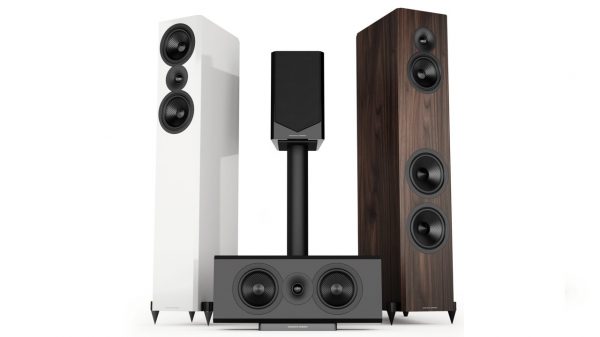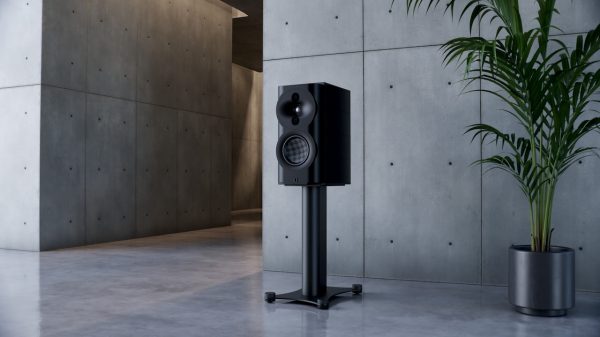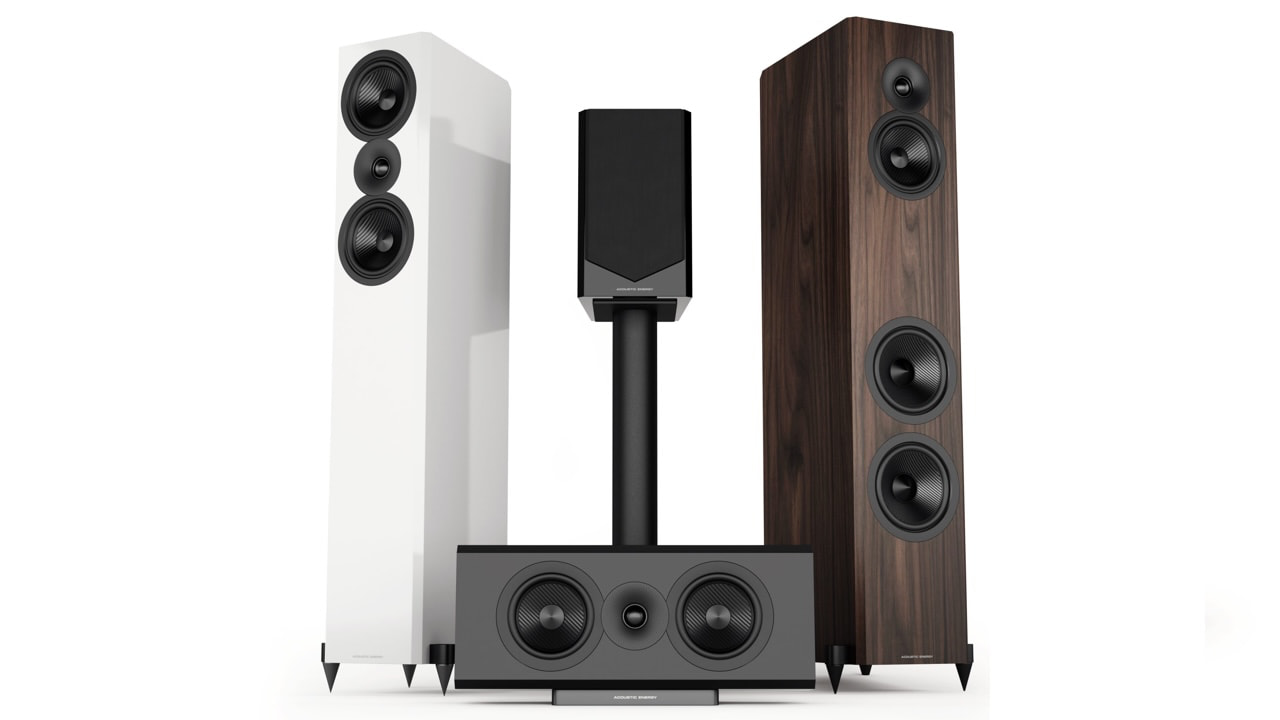
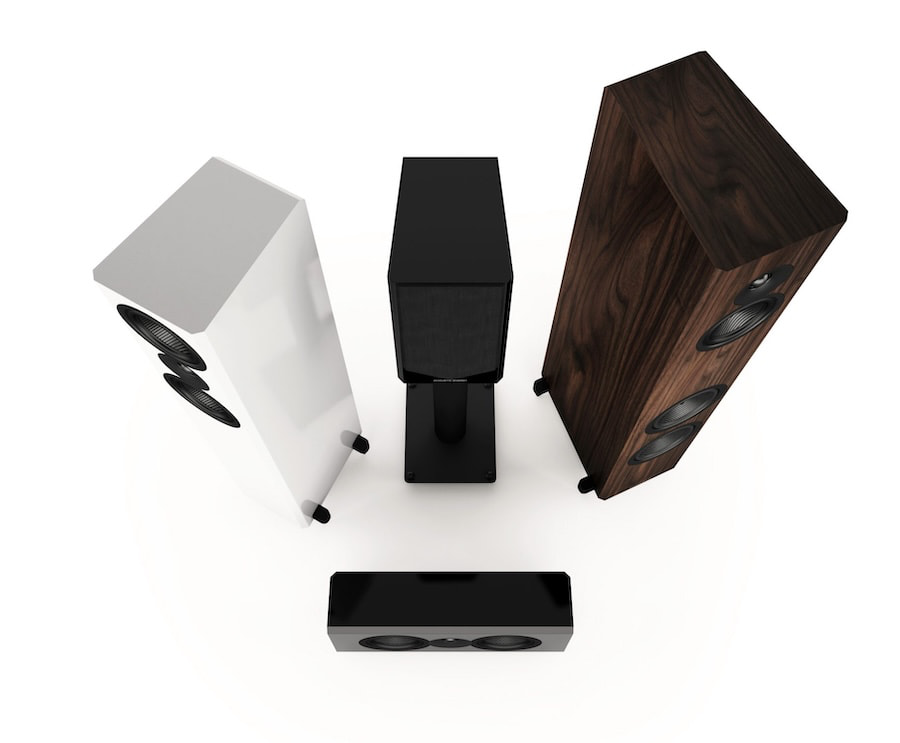
British loudspeaker manufacturer Acoustic Energy has announced a completely redesigned 500 Series for 2026, introducing four passive loudspeakers with new carbon fiber drivers, a 29 mm soft dome tweeter derived from its flagship Corinium, revised crossovers, and reshaped cabinets. The lineup includes the AE500² standmount, AE509² and AE520² floorstanders, and a new AE507² LCR speaker designed for stereo and home theater installations. UK prices range from £650 each for the AE507² to £4,000 per pair for the AE520², with worldwide availability scheduled for December.
Acoustic Energy has been on something of a roll in recent years, and we’ve been paying attention. My AE1 Active listening experience established those compact British monitors as one of my benchmarks for affordable active loudspeakers, while the AE100 MK2 demonstrated that the company could deliver considerable bass impact and scale for under $500. The Corinium floorstanders subsequently demonstrated what Acoustic Energy could accomplish with a much larger engineering budget.
The interesting part about the new 500 Series isn’t simply that the company has borrowed technology from Corinium. It already did that with the redesigned 300 Series in 2025. What’s different this time is how Acoustic Energy has reworked its carbon fiber driver technology, abandoned the previous carbon fiber dome tweeter, and substantially changed the configuration of its largest floorstander. This is more than a new cabinet finish and a fresh badge.
What’s Actually New in the Acoustic Energy 500 Series?
A Major Change in Tweeter Design
The original 500 Series used a 25 mm carbon fiber dome tweeter, selected for its stiffness, low mass, and self-damping properties. That technology helped distinguish the range from Acoustic Energy’s more affordable loudspeakers, which traditionally relied on aluminum or other driver materials.
For 2026, the company has moved to a 29 mm soft dome tweeter developed through the Corinium project. The larger diaphragm and different material represent a significant change in engineering direction, with Acoustic Energy targeting smoother high-frequency integration, lower coloration, and a more natural presentation.
That’s particularly interesting because the original 500 Series was built around carbon fiber drivers throughout the frequency range. Acoustic Energy clearly believes the newer soft dome offers a better match for its revised midrange and bass drivers, rather than preserving an all-carbon design simply for consistency.
Whether the change results in a smoother top end without sacrificing the speed and clarity of the original speakers will require listening tests. A different diaphragm material doesn’t automatically guarantee better sound, regardless of how enthusiastically the marketing department describes it.
Redesigned Carbon Fiber Drivers
Acoustic Energy hasn’t abandoned carbon fiber for the midrange and bass drivers. Instead, it has developed a shallower cone profile and a new motor system engineered to maintain a more linear inductance characteristic as the driver operates.
Changes in voice coil inductance can contribute to distortion, particularly as the cone moves through its operating range. Reducing those variations should help improve midrange clarity and maintain more consistent behavior at higher output levels.
The new driver geometry is also intended to produce a more natural tonal balance. That matters because one of Acoustic Energy’s traditional strengths has been its combination of speed, dynamic impact, and detail, although some of its more affordable models can sound assertive through the upper frequencies depending on amplification and room acoustics.
In my 2026 compact loudspeaker comparison, the AE100 MK2 offered greater bass weight and vocal presence than some competitors but wasn’t quite as transparent as the Q Acoustics 3020c. The redesigned 500 Series targets a considerably higher price category, but the emphasis on cleaner midrange reproduction and driver integration is encouraging.
New Crossovers and Cabinet Construction
The crossover networks have been redesigned with particular attention to group delay and phase integration. Rather than concentrating exclusively on achieving a flat frequency response, Acoustic Energy has attempted to improve how the drivers work together through their crossover regions.
Reducing unwanted phase and timing differences can improve the consistency of the soundstage and the integration between the tweeter and midrange drivers. The company claims the changes produce greater coherence and more natural reproduction of voices and instruments, although those benefits remain to be independently evaluated.
The cabinets retain Acoustic Energy’s Resonance Suppression Composite (RSC) construction, which uses constrained layer damping to reduce cabinet vibration and unwanted acoustic radiation. However, the new faceted trapezoidal enclosure introduces angled surfaces intended to disperse internal reflections rather than allowing them to reflect repeatedly between parallel cabinet walls.
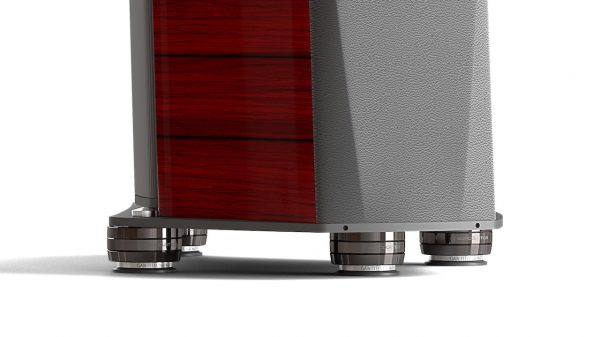
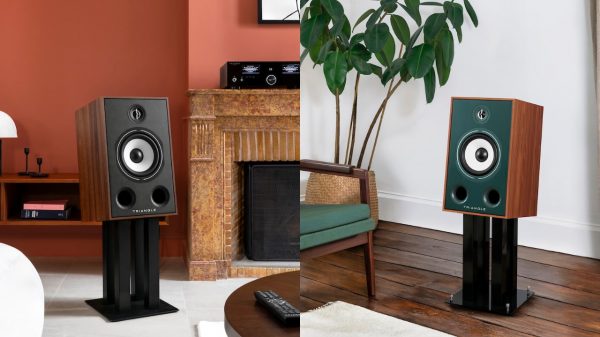
The exterior also receives updated aluminum feet, black spikes on the floorstanding models, silicone driver trims, and a more understated screen-printed logo. Three finishes are available: Piano Gloss White, Piano Gloss Black, and American Walnut wood veneer.
Four Models for Stereo and Home Theater
Acoustic Energy AE500² — £1,200 per pair
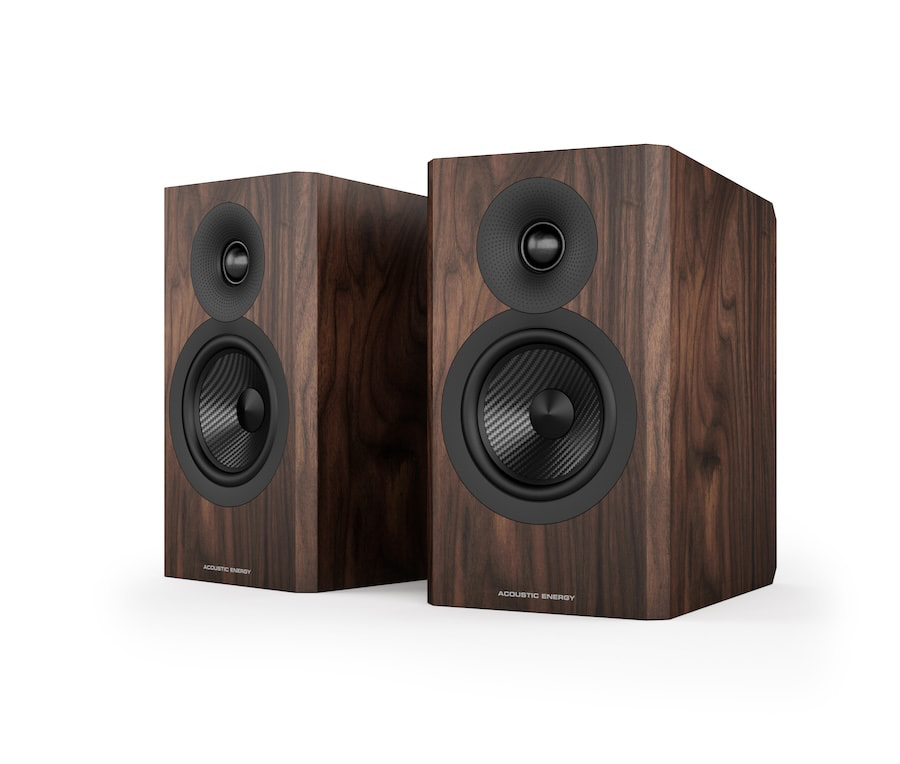
The compact AE500² is a two-way standmount speaker combining a 125 mm carbon fiber mid/bass driver with the new soft dome tweeter. It’s designed for smaller listening environments and systems where buyers want the engineering of the more expensive 500 Series without accommodating a large cabinet.
Its 87 dB sensitivity suggests that amplifier quality and available power will still matter, particularly in larger rooms or when listening at higher levels. The nominal 8-ohm impedance is a welcome change from the previous model’s 6-ohm rating, although impedance alone doesn’t tell the complete story of amplifier compatibility.
Acoustic Energy AE509² — £2,700 per pair
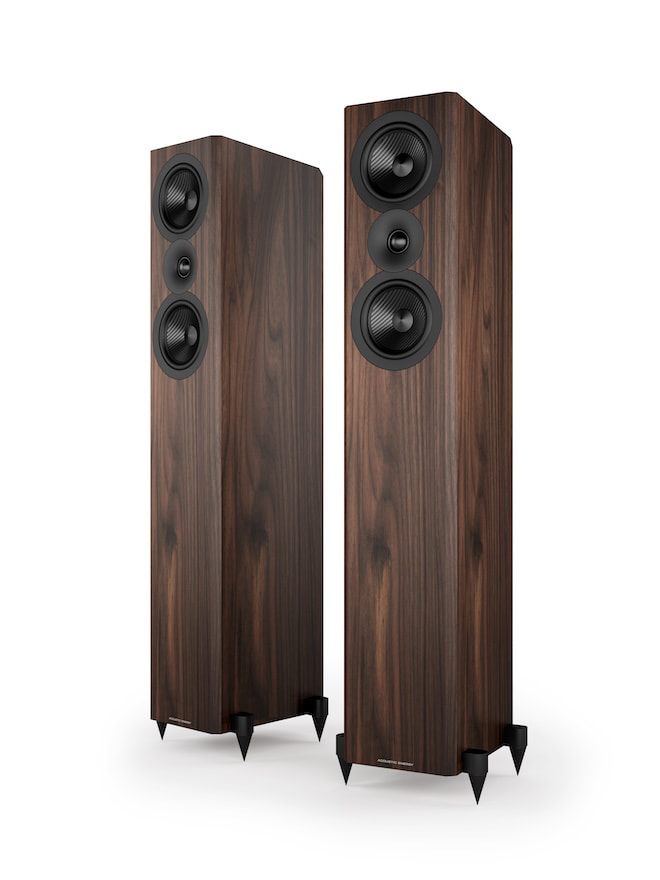
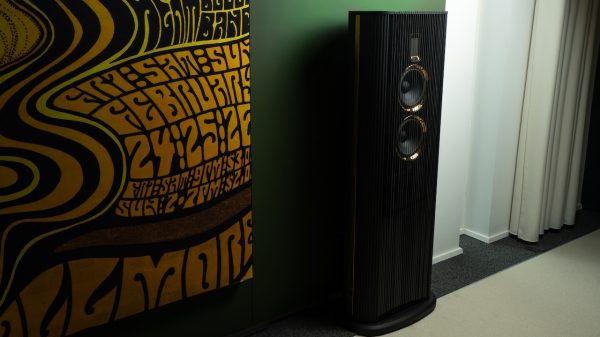
The AE509² retains a two-way floorstanding configuration with two 125 mm carbon fiber drivers arranged around the tweeter in a midwoofer-tweeter-midwoofer layout.
It’s aimed at listeners who want greater bass extension and output than the standmount without moving to a much larger three-way design. The revised cabinet is also lighter than its predecessor, dropping from 22 kg to 19 kg per speaker.
With its relatively narrow front baffle and restrained appearance, the AE509² may prove to be the most practical option for medium-sized listening rooms where floor space and placement flexibility matter.
Acoustic Energy AE520² — £4,000 per pair
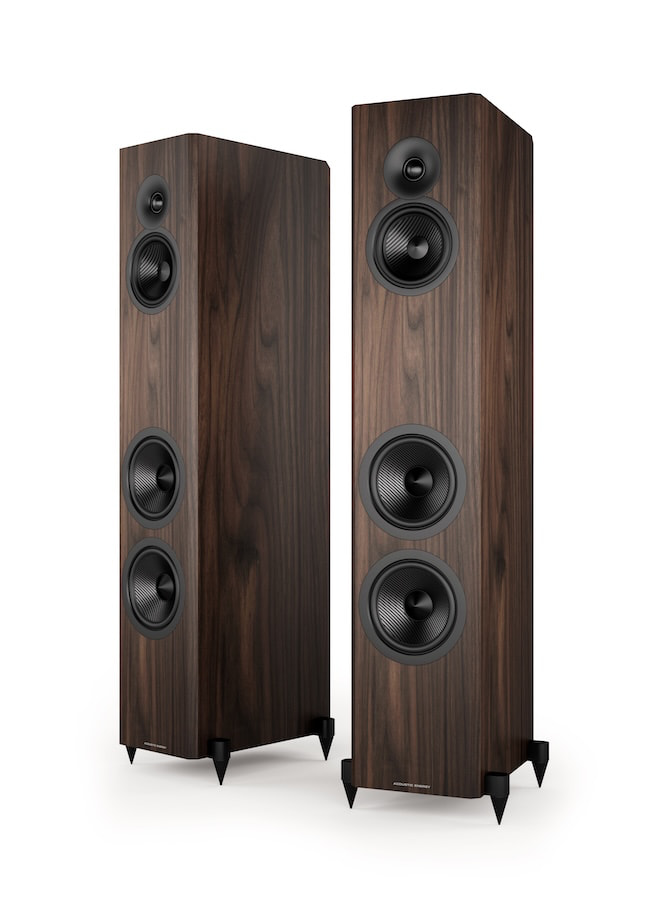
The largest model undergoes the most significant transformation.
The previous AE520 employed five 125 mm carbon fiber midrange and bass drivers alongside its tweeter. The new AE520² uses one 125 mm carbon fiber midrange driver and two larger 165 mm carbon fiber woofers, combined with the 29 mm soft dome tweeter in a three-way configuration.
That’s a substantial departure from the original design. Instead of using multiple smaller bass drivers, Acoustic Energy has moved toward the larger woofer arrangement used in its Corinium project.
The company specifies a frequency range extending to 28 Hz at ±6 dB, compared with 30 Hz for the outgoing model, while sensitivity increases from 90 to 92 dB. Interestingly, rated power handling falls from 300 to 200 watts. That doesn’t necessarily indicate lower usable output or inferior performance, but it’s worth noting.
The AE520² is also physically shorter than its predecessor while using a deeper cabinet, suggesting that Acoustic Energy has reconsidered the internal volume and bass alignment rather than merely replacing the existing drivers.
Acoustic Energy AE507² — £650 each
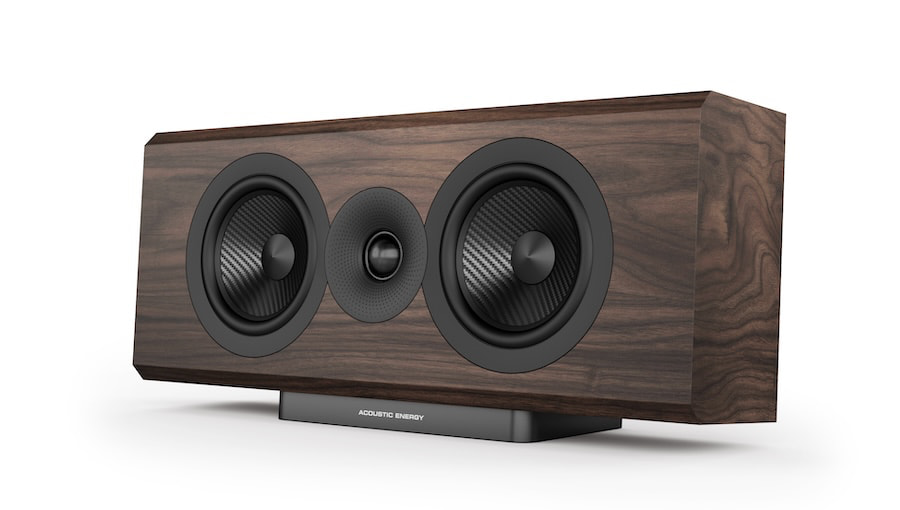
The genuinely new addition to the family is the AE507², a compact LCR (Left, Center, Right) loudspeaker intended for home theater installations and wall mounting.
It combines two 125 mm carbon fiber drivers with the 29 mm dome tweeter in a shallow enclosure incorporating a passive radiator. At just 125 mm (4.9 inches) deep, it offers an alternative to conventional center-channel speakers and deeper bookshelf models.
The AE507² also creates an opportunity to build a matching multichannel system around the new 500 Series. Buyers could combine the floorstanders or standmounts with the LCR model for center and surround duties, although its actual placement flexibility and performance in different orientations deserve closer examination.
Acoustic Energy 500 Series 2026 Specifications
| Specification | AE500² | AE509² | AE520² | AE507² |
|---|---|---|---|---|
| Speaker type | 2-way standmount | 2-way floorstander | 3-way floorstander | 2-way LCR |
| Mid/Bass drivers | 1 × 125 mm | 2 × 125 mm | 1 × 125 mm mid, 2 × 165 mm bass | 2 × 125 mm, passive radiator |
| Tweeter | 29 mm soft dome | 29 mm soft dome | 29 mm soft dome | 29 mm soft dome |
| Frequency range | 45 Hz–26 kHz | 32 Hz–28 kHz | 28 Hz–28 kHz | 55 Hz–28 kHz |
| Sensitivity | 87 dB | 89 dB | 92 dB | 90 dB |
| Impedance | 8 ohms | 8 ohms | 6 ohms | 8 ohms |
| Power handling | 120 W | 175 W | 200 W | 120 W |
| Crossover | 3.2 kHz | 3.4 kHz | 220 Hz / 3.6 kHz | 2.6 kHz |
| Dimensions H × W × D (mm) | 310 × 185 × 270 | 1000 × 185 × 270 | 1050 × 185 × 360 | 200 × 500 × 125 |
| Weight (each) | 7.5 kg | 19 kg | 30 kg | 6.8 kg |
| UK price | £1,200/pair | £2,700/pair | £4,000/pair | £650/each |
The Bottom Line
I’ve spent enough time with Acoustic Energy loudspeakers to appreciate that the company has a fairly consistent approach to sound: strong dynamics, excellent timing, articulate bass, and a level of transparency that can embarrass more expensive competitors. The AE1 Active remains one of my favorite examples of what the brand can accomplish when the engineering takes precedence over unnecessary features.
The new 500 Series looks like a meaningful step forward, particularly with the transition to the Corinium-derived soft dome tweeter and the completely revised AE520². The latter interests me most because the move to larger 165 mm woofers could deliver greater low-frequency authority with fewer drivers. The new AE507² also fills an important gap for buyers interested in using Acoustic Energy loudspeakers in a serious multichannel system.
There is one important qualification. Acoustic Energy has already introduced Corinium technology into its less expensive 300 Series, and the new 500 models must demonstrate why their more expensive carbon fiber driver platform, cabinets, and crossovers justify the premium.
Pricing & Availability
The new Acoustic Energy 500 Series will be available beginning in December 2026 through authorized dealers worldwide.
UK recommended retail pricing is £1,200 per pair for the AE500², £2,700 per pair for the AE509², £4,000 per pair for the AE520², and £650 each for the AE507².
U.S. pricing has not yet been announced. North American buyers should consult their local Acoustic Energy dealer for availability and confirmed domestic pricing.
For additional information: Acoustic Energy
Related Reading:
- Acoustic Energy AE2 40th Anniversary Standmount Speakers Debut At North West Audio Show 2026
- Acoustic Energy AE Active Debuts At High End Vienna 2026: Fully Analog Powered Speakers, Not Wireless Lifestyle Boxes
- Acoustic Energy Marks 40 Years With AE1 Anniversary Edition Loudspeaker: A Classic That Still Refuses To Age Quietly