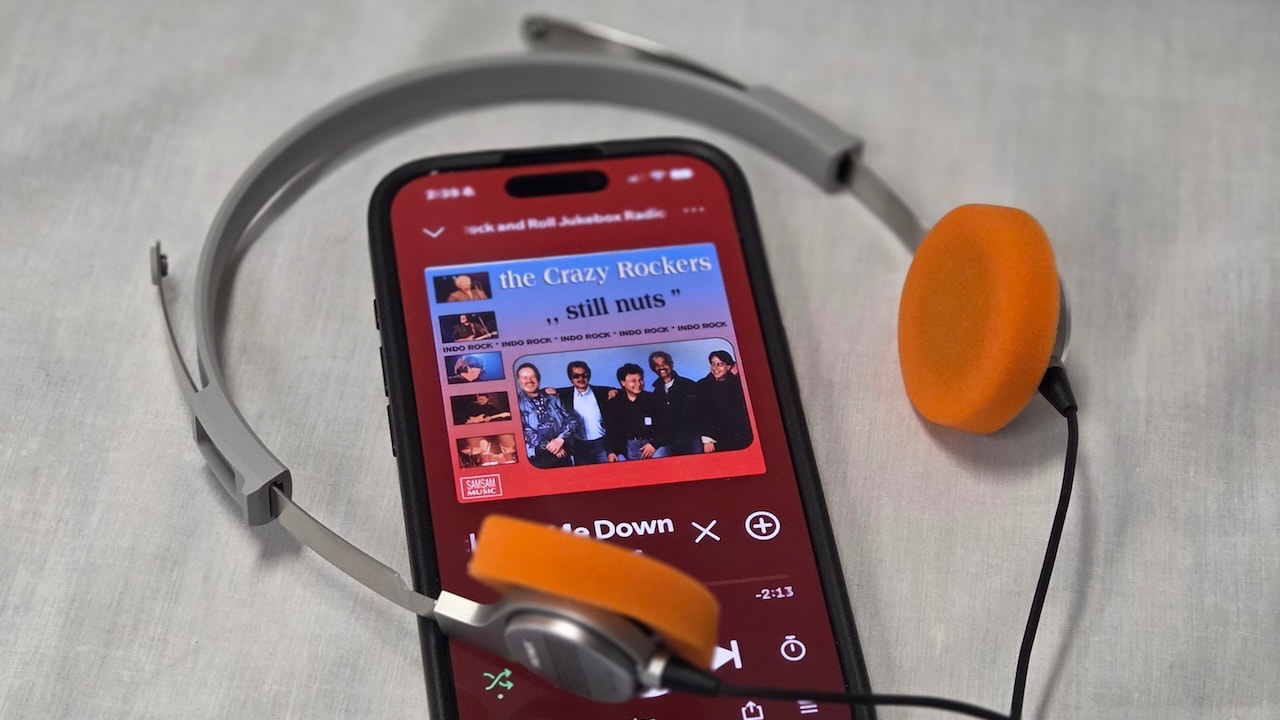
Few developments in audio have been as revolutionary as Sony’s original Walkman. Portable audio products existed before its introduction in 1979, but many were designed for shared listening rather than personal enjoyment. A boombox was great by the pool or at a picnic, but when you and your siblings wanted to listen to different music on a long road trip, it wasn’t much of a solution.
For a lot of us, the Walkman offered an escape from taking turns listening to the soundtrack from The Sound of Music, mountain dulcimer music, and Ray Stevens’ Greatest Hits before finally getting another chance to choose a cassette. I’d heard enough of all three to last several lifetimes by the time I’d saved up enough money to buy my own Walkman.
Related Reading:
- Stranger Things Strike Again: IsoAcoustics, IsoTek & The Great Weiner Resurrection: Editor’s Round-Up
- Stranger Things Complete Series 4K UHD Blu-Ray Box Sets Arrive In July With Four Collector Editions
How Sony’s Original Walkman Changed Personal Audio
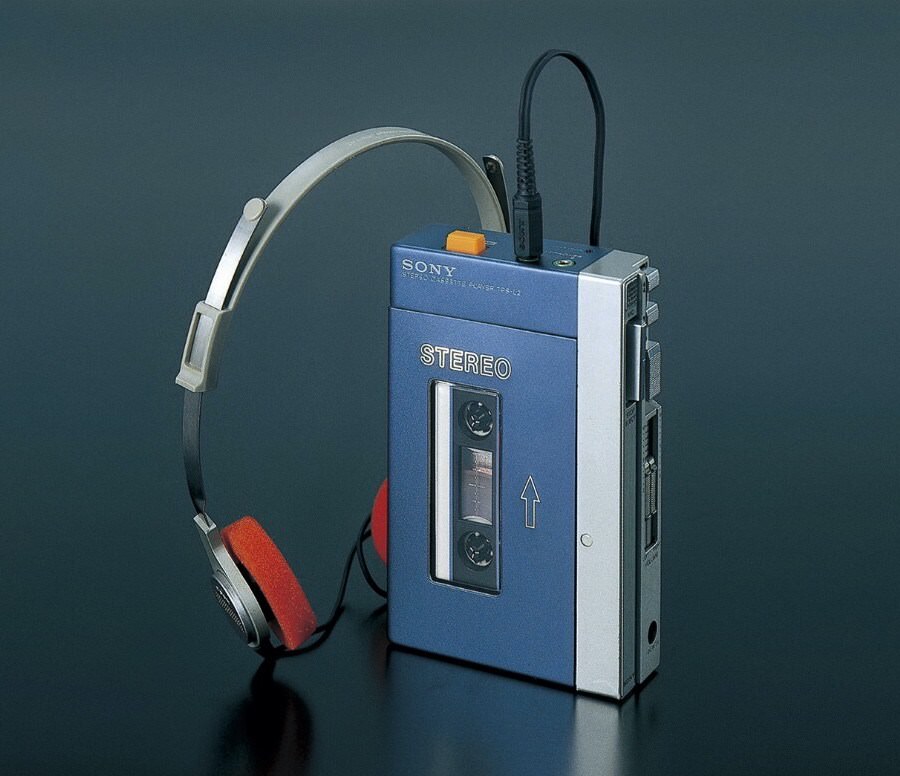
The concept was simple: a battery-powered cassette player paired with lightweight headphones. Making it work, however, presented some real challenges. Portable cassette recorders already existed, but few were small enough for comfortable everyday use. Boomboxes often required six or eight D-cell batteries, making them impractical for anyone who wanted to carry their music around. Sony’s original Walkman, the TPS-L2, managed to operate on just two AA batteries by adapting technology from the company’s existing Pressman portable recorder and eliminating unnecessary features, including its speaker and recording capability.
The headphones presented another problem. In 1979, many popular hi-fi headphones were large, heavy, and intended for listening at home, often using a 6.35mm (¼-inch) connector. Some professional models from AKG and Sennheiser also featured impedances of 300 or 600 ohms, making them less suitable for a small, battery-powered cassette player. Sony needed something different: lightweight, efficient headphones that could deliver satisfying sound without draining the Walkman’s limited power supply.
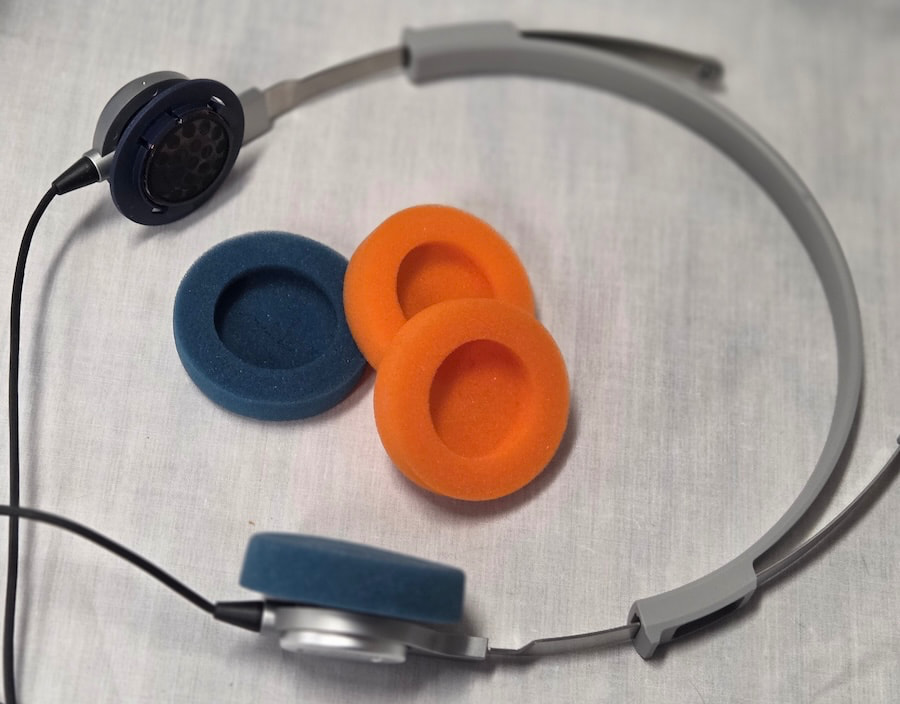
Enter the Sony MDR-3, developed as part of the company’s new lightweight H-AIR headphone family, along with the MDR-3L2 version supplied with the original Walkman. These headphones represented a radical departure from conventional designs. Instead of bulky over-ear enclosures, Sony used compact, open-air earpieces with colorful foam pads, a lightweight headband, and small drivers. The Walkman’s bundled MDR-3L2 also used a 3.5mm connection rather than the larger plug common on home audio equipment.
Today, lightweight portable headphones are nothing unusual, but in 1979, this was a remarkably different approach. Traditional audiophiles might have questioned whether such tiny headphones could compete with their substantial home models, but they were missing the bigger picture. Sony wasn’t trying to replace a serious home listening system. It was giving an entire generation of young people something they desperately wanted: the freedom to listen to their own music without hearing someone yell, “Turn that crap off!”
The Walkman and its lightweight headphones made personal listening practical almost anywhere. You could finally listen to your favorite cassette without subjecting everyone around you to it, although your parents might still have something to say about the volume.
Now that was genuinely game-changing, unlike 99.9% of the products described that way today.
Stranger Things Brings the Sony Walkman Back Into the Spotlight
A decade ago, Netflix introduced Stranger Things, its wildly popular series set in the 1980s, and with it came Max Mayfield, a character whose beloved Sony Walkman became much more than a nostalgic prop. By the fourth season, Max’s music and her Sony WM-8 Walkman were central to the storyline, helping introduce a new generation to portable cassette players. As the show’s popularity exploded, so did interest in vintage Walkman models and the lightweight headphones that helped define the era.
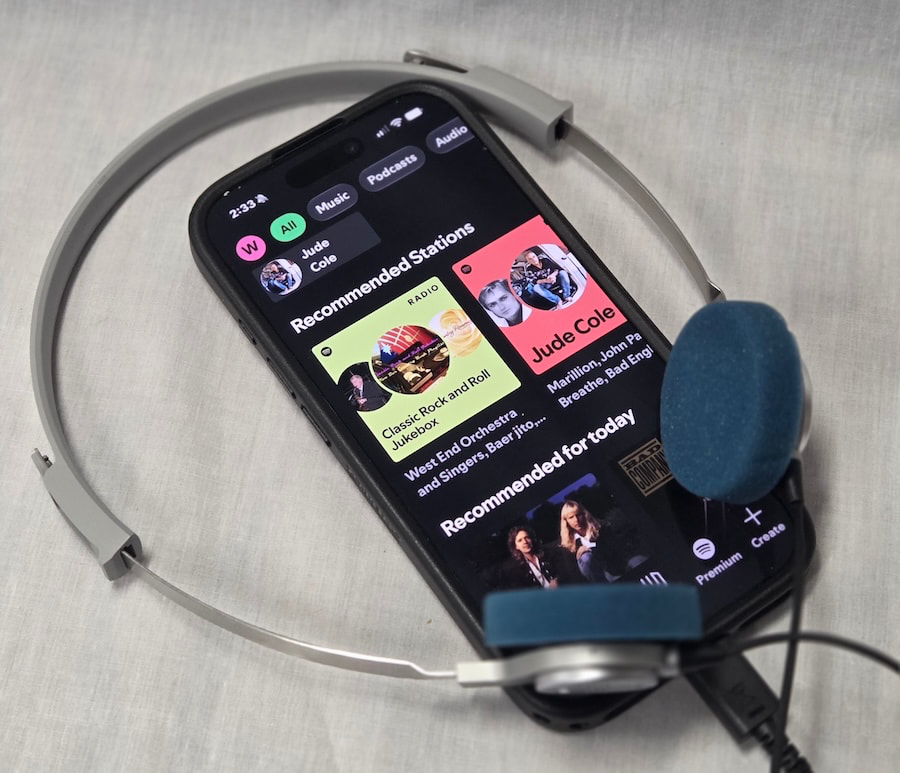
Of course, most listeners today rely on digital music, especially when they’re on the go, and many smartphones no longer include a 3.5mm headphone jack. Using vintage MDR-3 headphones often requires a dongle or adapter. There’s also the issue of age. These headphones are approaching 50 years old, and deteriorating foam earpads, worn components, and increasingly scarce replacement parts make finding a usable pair more challenging. Sony built them well, but nobody expected them to remain in service for nearly half a century.
It seems someone at Sony is feeling nostalgic, too. Just in time for Stranger Things Day on November 6, the company is teasing what appears to be a modern revival of its original MDR-3 headphones. The official announcement is scheduled for November 5 in the United States, and while Sony hasn’t confirmed the product name or specifications, the familiar silhouette and blue-and-orange imagery offer some rather convincing clues. Could one of the most influential portable headphone designs finally be making a comeback?
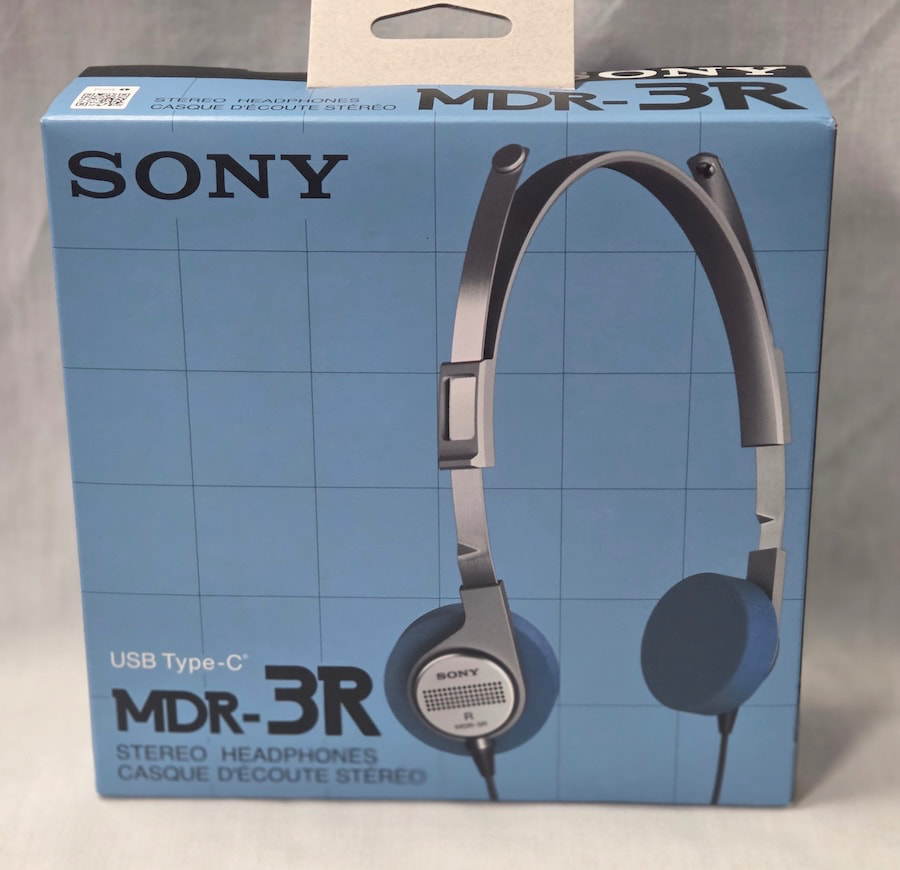
Sony MDR-3R Design & Features: Retro Looks Meet USB-C
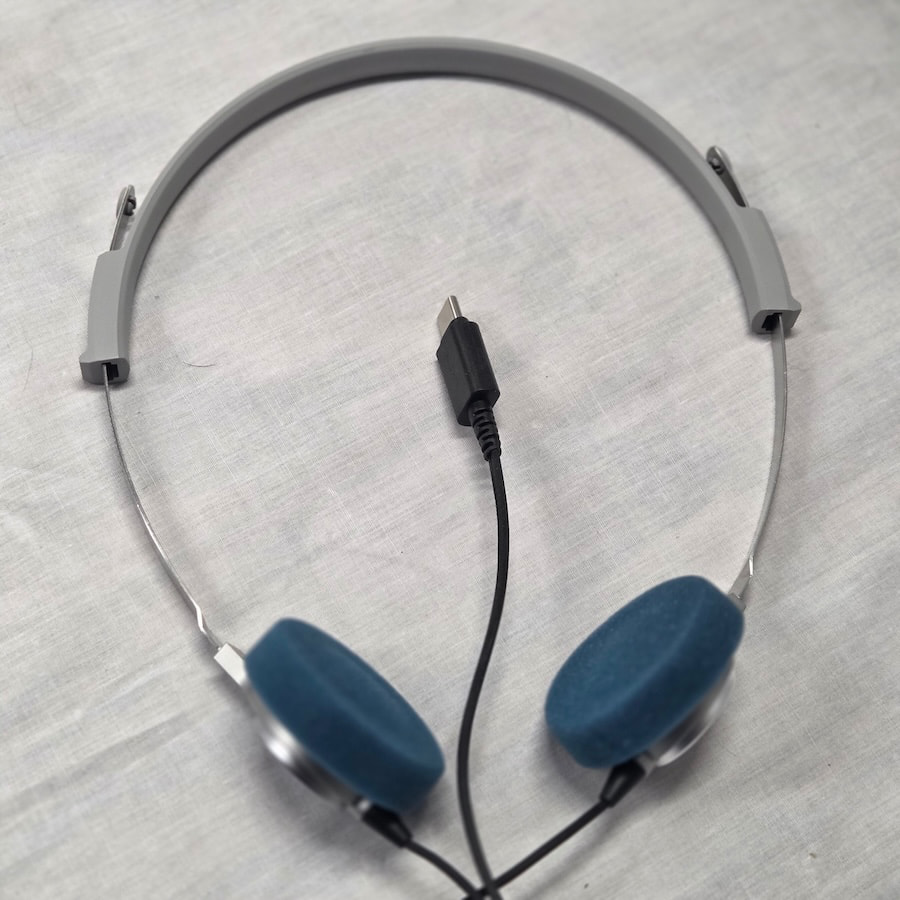
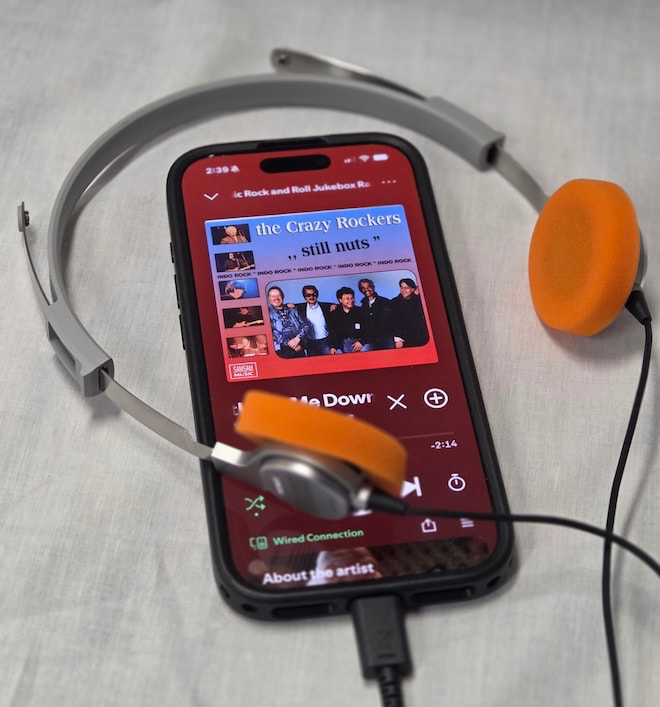
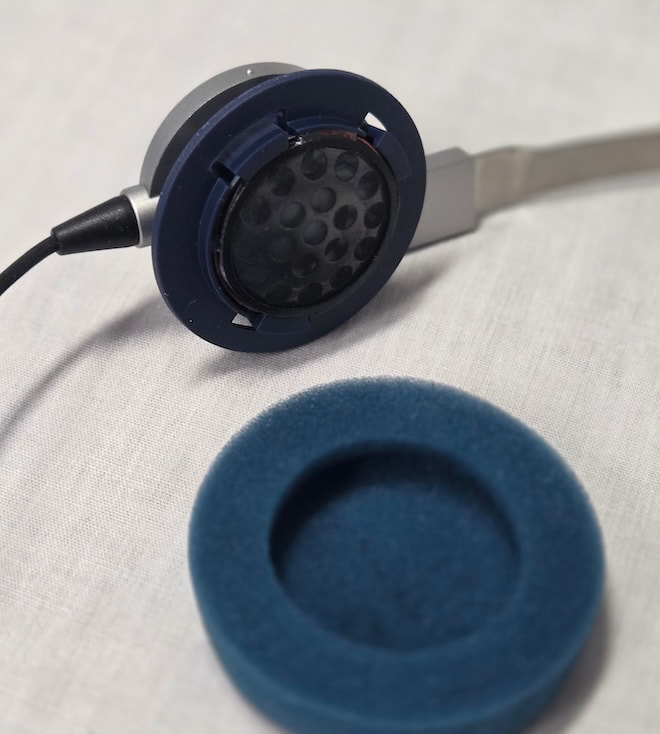
The new Sony MDR-3R comes in two versions: a standard model with a gray headband and blue-and-orange earpads, and a special Stranger Things edition featuring a black headband and red pads. True to the original, the MDR-3R weighs just 75 grams, with drivers measuring roughly one inch across and 32mm foam earpads. Owners of vintage MDR-3 headphones will be especially pleased that Sony is bringing back replacement pads in four colors: blue, orange, red, and black. Better still, the new pads are compatible with the originals, making them available again after more than two decades.
The MDR-3R retains the familiar look of its predecessor but replaces the Walkman-era 3.5mm connection with USB-C, adding a microphone and volume controls to the left-side cable. Apart from those changes, it’s remarkably difficult to distinguish the new headphones from the originals. The foam pads are also quick and easy to replace, which is welcome news for anyone who remembers how quickly the open-cell foam could deteriorate and collect grime, especially when subjected to the less-than-gentle treatment of teenagers.
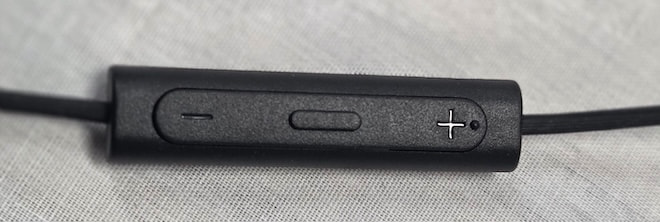
The switch to USB-C brings more substantial changes beneath the familiar exterior. Unlike the original passive headphones, which relied on the Walkman’s analog headphone output, the MDR-3R incorporates a 16-bit/48kHz DAC and amplifier to handle digital audio directly from compatible devices. During testing, I connected them to a Windows 11 PC, MacBook, iPad, Samsung Galaxy S25+, iPhone 17, and Chromebook. All worked immediately, without additional drivers or tinkering.
Sony emphasized this simplicity during its press briefing. Wireless headphones have certainly made listening more convenient, but they’ve also introduced a confusing collection of Bluetooth codecs, compatibility requirements, and occasional connection problems. The MDR-3R avoids those complications entirely. There’s no pairing, no worrying about which codecs your phone supports, and no interference from nearby devices. Just plug them in and listen.
Almost 50 years after the original Walkman made personal listening practical, there’s something rather appealing about Sony returning to such a straightforward idea.
A Midrange-Forward Presentation With Surprising Punch
The Sony MDR-3R has a nominal impedance of 32 ohms and a stated frequency response of 20Hz–20kHz. Sony had not published a sensitivity specification at press time, and the frequency response figures don’t include measurement tolerances or methodology. Based on my listening, I suspect the actual response varies considerably across that range. Bass rolls off fairly steeply below approximately 70Hz, with little meaningful sub-bass presence. Most of the low-frequency energy comes from the mid-bass, which delivers satisfying punch above 100Hz. These aren’t headphones for deep-bass enthusiasts, but what’s there is clean, controlled, and sufficient to keep music engaging.
The midrange is more prominent than the bass, offering good clarity and natural timbre. Vocals are pushed forward, with acoustic guitars and strings benefiting from the elevated midrange. Detail retrieval is moderate, but considering the MDR-3R’s intended use for portable listening, that’s hardly a significant drawback. In noisy outdoor environments, much of that subtle information would likely be masked by surrounding sounds anyway. Treble is polite, with enough air and sparkle to keep things lively without becoming harsh or fatiguing. Percussion has satisfying snap, while cymbals retain enough energy to sound reasonably realistic.
Soundstage is surprisingly intimate for a fully open design, although its proportions are well balanced, preventing the presentation from feeling congested or uneven. Instrument separation and imaging are average rather than exceptional, but neither is disappointing when you consider the intended use and price. The MDR-3R isn’t trying to compete with serious audiophile headphones, and that’s perfectly fine. It delivers a clear, enjoyable presentation that makes sense for the kind of everyday listening Sony originally had in mind.
The Bottom Line
For some, the Sony MDR-3R will be a nostalgia purchase. For others, it’s the perfect addition to a Stranger Things collection or cosplay outfit. But there’s also a compelling case for these headphones as an affordable, practical alternative to wireless models. They’re incredibly lightweight, take up almost no room in a bag, and work with a wide range of USB-C devices without pairing, charging, or worrying about Bluetooth compatibility.
At $59.99 for the standard model and $79.99 for the Stranger Things edition, the MDR-3R is inexpensive enough to qualify as an impulse purchase for some and affordable enough for younger listeners saving their allowance. Sound quality is surprisingly good for the money, with clear mids, punchy bass, and a relaxed treble presentation. Deep bass and expansive imaging aren’t on the menu, but that was never the point.
What makes the MDR-3R special is that Sony hasn’t simply repackaged a classic design for nostalgia’s sake. By retaining the original’s featherweight construction and distinctive appearance while adding USB-C digital audio, Sony has made a nearly 50-year-old headphone design relevant to a new generation. In a market dominated by increasingly expensive wireless headphones, there’s something refreshing about a simple wired model that doesn’t need an app, a battery, or a firmware update.
Who would have thought that a headphone design from 1979 could return in 2026 and make such a convincing case for keeping things simple? Whether the MDR-3R becomes a new fan favorite remains to be seen, but it’s an appealing revival that connects two generations of personal audio.
Then again, stranger things have happened.
Pros:
- Ultra-lightweight, comfortable design inspired by the original 1979 Sony MDR-3
- Surprisingly good sound quality with clear mids, punchy bass, and relaxed treble
- Plug-and-play USB-C connectivity with no charging, pairing, or Bluetooth complications
- Affordable pricing, with two versions and easily replaceable foam earpads
Cons:
- Limited sub-bass extension and relatively narrow soundstage
- Open design offers virtually no isolation from outside noise
- Foam earpads can deteriorate and collect dirt over time
- USB-C connection limits compatibility with older analog audio sources
Our Ratings:
★★★★★★★★★★ Sound Quality
★★★★★★★★★★ Build Quality
★★★★★★★★★★ Comfort
★★★★★★★★★★ Value
★★★★★★★★★★ Nostalgia Factor!
Where to Buy:
Related Reading: