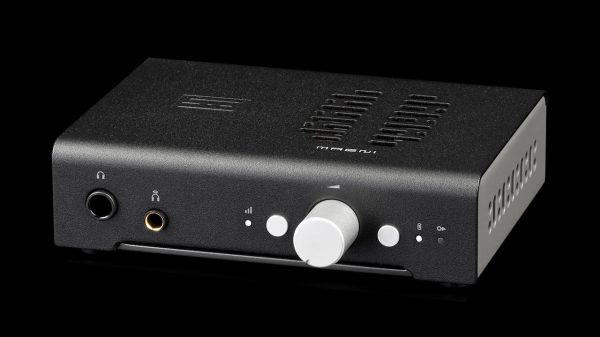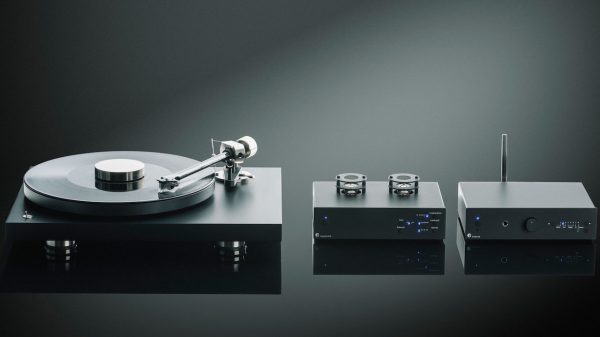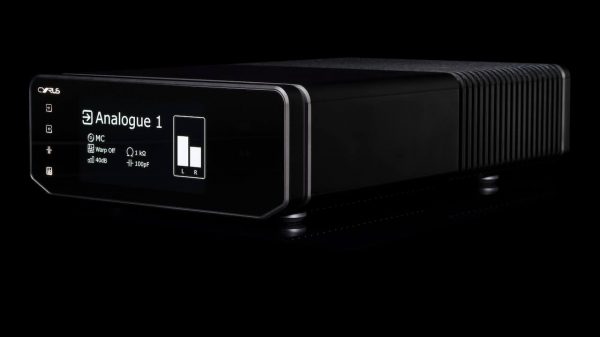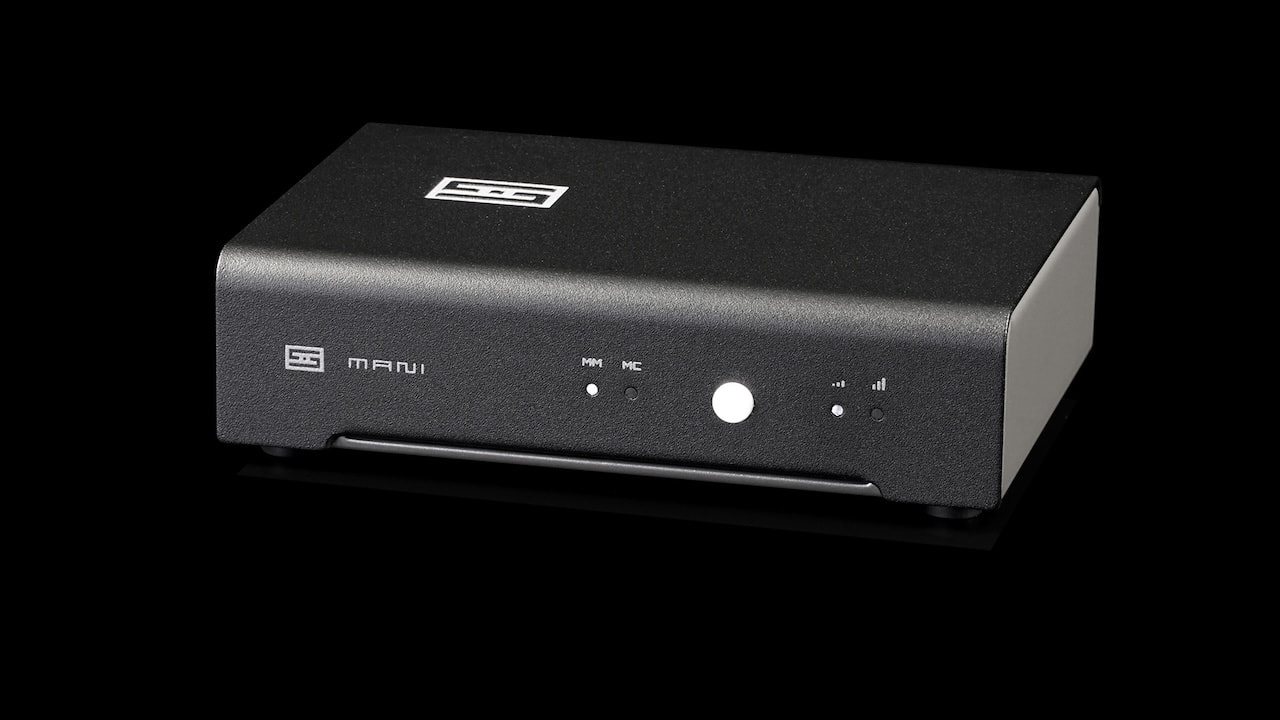
Schiit Audio has committed a minor act of heresy in modern hi-fi: it has improved an existing component, made it easier to operate, and decided not to charge customers more for the privilege. The new Mani 3 phono preamplifier costs $149, exactly the same as the Mani 2 it replaces, despite revised circuitry, microprocessor-controlled switching, and more convenient access to its most frequently used settings.
We’ve been recommending Schiit’s affordable phono stages for years, including the original Mani 2, which earned a place in our Editors’ Choice phono preamplifier guide. The little American-made box was never particularly glamorous, but its low noise, flexible cartridge loading, and excellent value made it an easy recommendation for listeners looking to get more from their turntables.
The Mani 3 builds on that foundation rather than replacing it with some unnecessarily elaborate technology. And while the upgrade might not inspire audiophiles who believe a phono stage needs its own dedicated power station and a five-figure price tag, it addresses some genuine shortcomings of the previous model.
Related Reading:
- Cambridge Audio Spira $499 Turntable Arrives To Match Its New L/R Wireless Speakers
- What Is Audio-Technica’s VMx Cartridge Line And Why Is It On The Andover-One DD?
Schiit Finally Puts the Important Controls Where You Can Reach Them
One of the Mani 2’s more irritating features was its collection of DIP switches underneath the chassis. They worked perfectly well, but changing settings meant reaching under the component or turning it over, which isn’t particularly convenient when experimenting with cartridges.
The Mani 3 moves gain selection and MM/MC input loading control to the front panel, making adjustments significantly easier. Gain is selectable at 30, 40, 50, or 60dB, allowing the preamp to accommodate a wide range of moving-magnet, moving-iron, and moving-coil cartridges.
Schiit has also introduced microprocessor supervision and precision sealed-relay switching. The control system temporarily mutes the output when gain settings change, allowing the circuitry to stabilize and reducing switching disturbances.
That doesn’t eliminate the need to exercise caution. Schiit still recommends lowering your amplifier’s volume before changing gain settings because the difference between 30dB and 60dB is substantial.
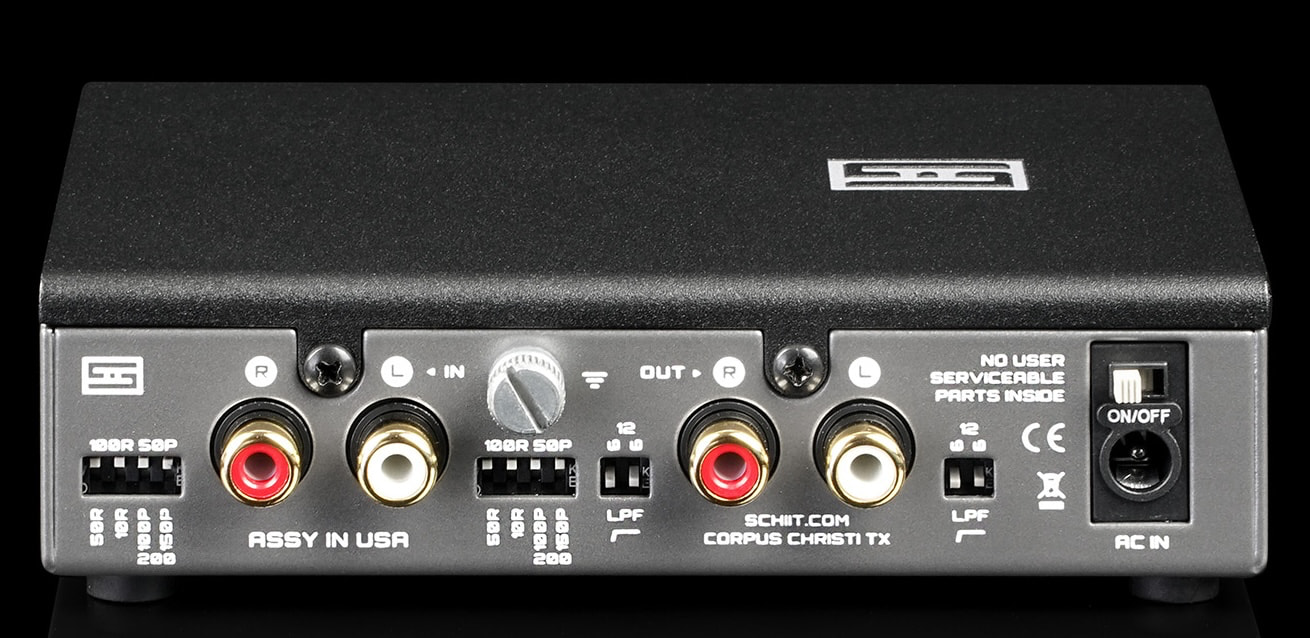
More specialized cartridge-loading and low-frequency filter settings remain accessible through switches on the rear panel. That’s a sensible compromise because most listeners won’t need to adjust those nearly as often.
New Circuitry, Lower Noise, and Better RIAA Accuracy
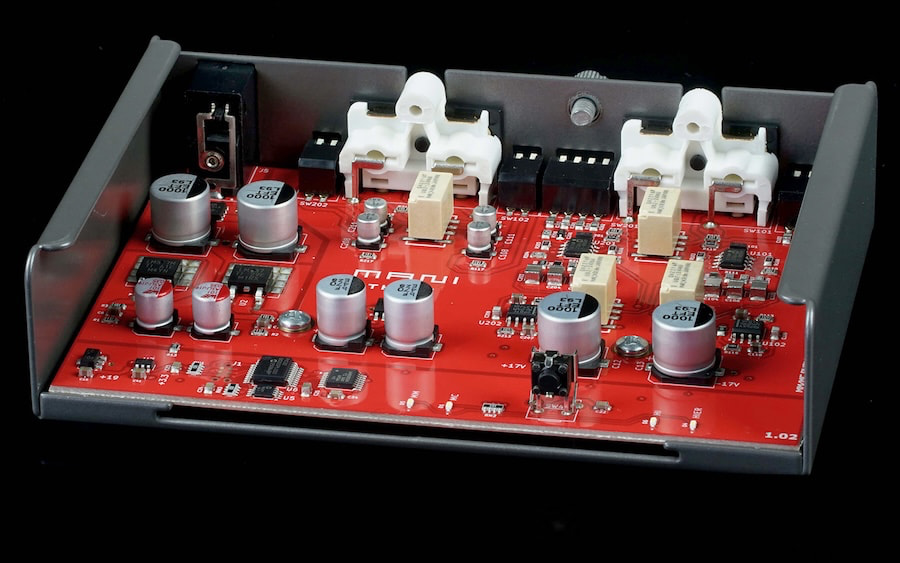
Inside the Mani 3, Schiit has replaced the previous OPA1612 gain-stage devices with Analog Devices AD4898 operational amplifiers, supported by a revised DC servo and a passive RIAA equalization network.
The circuit uses precision film capacitors and thin-film resistors, while the regulated linear power supply now operates with ±17.5V rails, compared with the ±16V rails of the Mani 2. The higher supply voltage provides additional operating headroom, particularly useful when handling dynamic passages and higher-output cartridges.
Schiit specifies RIAA accuracy of ±0.15dB from 20Hz to 20kHz, an improvement over the Mani 2’s stated ±0.2dB. That’s a measurable refinement, although the company acknowledges that overall performance gains are incremental rather than revolutionary.
For warped records and unwanted subsonic energy, the Mani 3 retains selectable passive low-frequency filtering with 6dB/octave and 12dB/octave slopes centered at 15Hz. The filter can also be bypassed when it isn’t needed.
This is useful when playing imperfect pressings that cause woofer cones to move excessively without contributing anything musically worthwhile. It won’t repair a badly warped record, but it can reduce unnecessary low-frequency energy reaching your amplifier and loudspeakers.
What Makes the Mani 3 Different?
There’s no shortage of inexpensive phono preamplifiers, but relatively few offer this combination of adjustable gain, configurable cartridge loading, low-noise circuitry, and convenient physical controls at $149.
The Mani 3 also reflects Schiit’s continued investment in domestic manufacturing. Its circuit boards are produced on the company’s own surface-mount assembly line in Corpus Christi, Texas, while the metal chassis is manufactured in California.
We’ve seen the same approach in recent products such as the $699 Bifrost 3 DAC, which introduced substantial new functionality at a lower price, and the $999 Freya 2 preamplifier, with its unusual combination of tube and solid-state operating modes.
Schiit also recently introduced the $99 Vestri portable DAC, demonstrating that the company hasn’t forgotten the affordable end of the market while developing more elaborate components.
The Mani 3 follows that philosophy without requiring another app, proprietary software platform, or subscription. It’s a phono preamplifier. Connect your turntable, select the appropriate cartridge settings, and play some records.
Sometimes progress means making something less complicated rather than inventing another reason to stare at your smartphone.
Schiit Mani 3 Specifications
- Price: $149 USD
- Type: MM/MC/MI-compatible phono preamplifier
- Gain settings: 30, 40, 50, and 60dB
- Standard MM loading: 47kΩ / 50pF
- Standard MC loading: 100Ω / 50pF
- Selectable MC resistance: 10, 50, or 100Ω
- Selectable capacitance: 50, 100, 150, or 200pF
- RIAA accuracy: ±0.15dB, 20Hz – 20kHz
- Signal-to-noise ratio: Greater than 100dB at 40dB gain; greater than 108dB at 30dB gain (A-weighted, referenced to 2V RMS)
- THD: Less than 0.0007% at 40dB gain (A-weighted, referenced to 2V RMS)
- Overload margin: Greater than 20dB
- Output impedance: 75Ω
- Low-frequency filter: Bypass, 6dB/octave, or 12dB/octave at 15Hz
- Circuitry: AD4898 gain stages, passive RIAA network, OP07 DC servo
- Switching: Microprocessor-controlled sealed relays
- Power supply: External 16VAC transformer with regulated ±17.5V rails
- Power consumption: 4 watts
- Dimensions (WxDxH): 5 x 3.5 x 1.25 inches (12.7 x 8.89 x 3.18 cm)
- Weight: 1 lbs (0.45kg)
- Manufacturing: Built and tested in Corpus Christi, Texas
- Warranty: Three years
The Competition: U-Turn and iFi Have Something to Say
The U-Turn Pluto 2 ($129) is a straightforward alternative for listeners using moving-magnet cartridges. Designed and assembled in Massachusetts, it offers 40dB gain, an active subsonic filter, and low-noise circuitry inside a compact aluminum enclosure.
It’s $20 less expensive than the Mani 3 and makes sense for buyers who don’t anticipate experimenting with moving-coil cartridges. The Schiit is considerably more flexible, but that additional capability may be unnecessary for someone who plans to keep the same MM cartridge for years.
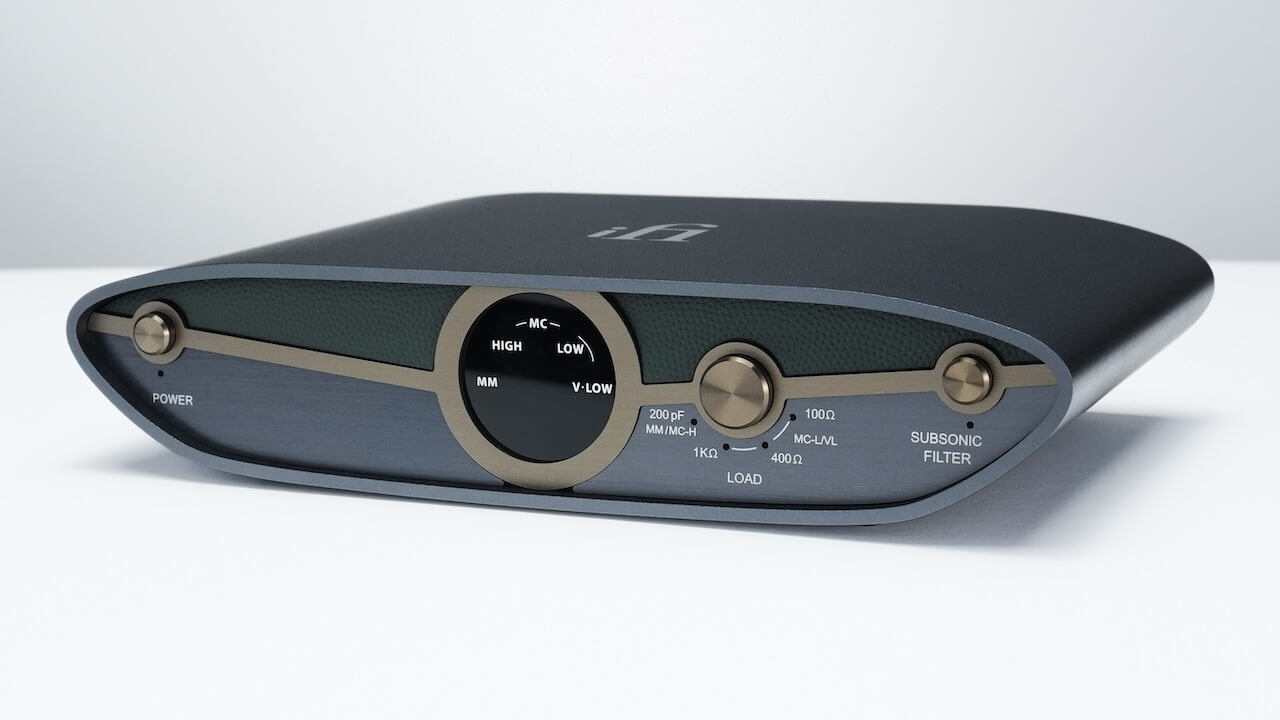
The iFi ZEN Phono 3 ($249) is a more sophisticated alternative that we’ve covered extensively. It supports MM and MC cartridges, four gain settings ranging from 36 to 72dB, adjustable loading, balanced and unbalanced outputs, and an intelligent subsonic filter designed to reduce warp-related energy.
Its additional gain and balanced output make it attractive to listeners with particularly low-output moving-coil cartridges or compatible balanced equipment. However, the iFi costs $100 more, leaving the Schiit with a meaningful price advantage for conventional single-ended systems.
Neither comparison establishes how the new Mani 3 sounds against these competitors. That will require direct listening, preferably with several cartridges and turntables rather than relying solely on published measurements.
Who Is the Schiit Mani 3 For?
The most obvious customers are vinyl enthusiasts who have purchased a capable turntable but are still relying on a basic built-in phono stage, or whose amplifier doesn’t include one.
It also makes sense for listeners considering a cartridge upgrade. Moving from an entry-level Audio-Technica or Ortofon MM cartridge to something more sophisticated shouldn’t require immediately replacing the phono preamplifier as well.
The Mani 3’s loading and gain options provide room to experiment, although users should match those settings to their cartridge manufacturer’s recommendations rather than assume that more gain automatically means better sound.
Existing Mani 2 owners have a different decision to make. Unless they’re frustrated by the underside switches or specifically want the revised circuitry, there’s no compelling reason to replace a perfectly functioning Mani 2 without first comparing the two.
The Bottom Line
The Schiit Mani 3 is a sensible evolution of a product that was already one of the better values in affordable analog audio. Front-panel controls address the biggest usability complaint, while the upgraded circuitry, improved RIAA accuracy, and more flexible gain management give buyers legitimate reasons to consider the new model.
At $149, it also raises an uncomfortable question for manufacturers charging considerably more for phono stages with fewer adjustment options. Expensive components can certainly offer advantages in noise performance, connectivity, and circuit design, but entry-level vinyl playback no longer requires accepting a stripped-down feature set.
Schiit hasn’t reinvented the phono preamplifier, and the Mani 3 still needs to prove itself through actual listening. What it has done is improve a well-established product without asking customers to pay more.
For a company named Schiit, that’s a refreshingly sensible way to do business. The only thing getting more expensive in this part of the vinyl hobby might be the records themselves.
Where to buy: $149 at Schiit.com
Related Reading:
- Best Gifts For Vinyl Lovers In 2026: 7 Ideas Record Listeners Will Actually Use
- Nagaoka Raises Cartridge And Stylus Prices As MoFi Distribution Takes Over U.S. Sales
- Grado Updates Its 2026 Phono Cartridge Lineup Across Lineage, Timbre, And Prestige Series: Brooklyn Built For Your Turntable